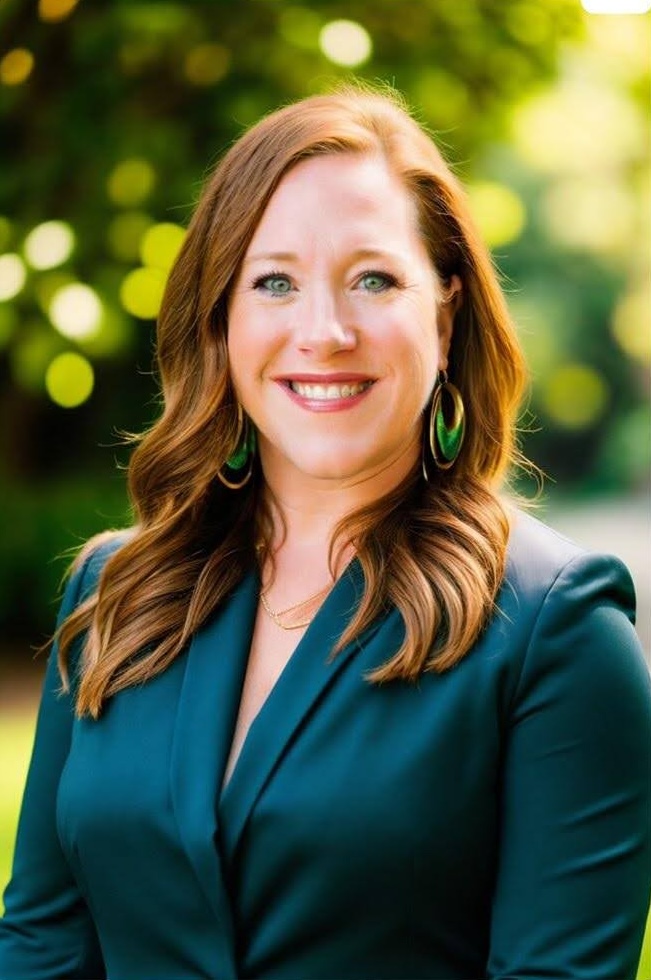
Private Sessions is CDFA-led audio. 17 episodes on the financial side of divorce, delivered privately to your phone by Leanne Ozaine, a Certified Divorce Financial Analyst with 20 years in practice. Three episodes are free. $97 unlocks everything.
“The CDFA was definitely the most important role throughout our whole divorce process. Having a CDFA do a financial analysis really helped provide clarity for both of us so we could come to an equitable division of assets.”Real comment, r/Divorce community · 21 upvotes · In response to “What do you wish you’d known at the start?”
No credit card required for free episodes · Private delivery via Hiro app · 30-day guarantee
QDRO · Equitable distribution · Marital vs. separate property · Present value of a pension · Tax basis on investments · Dissipation of assets
Your attorney uses these terms. Your spouse’s attorney definitely knows them.
Do you?
Most people say the same thing: “I don’t understand half of what my attorney sends me, and I’m afraid to ask because they charge me every time I do.” Attorney billing runs $300–500 per hour. Every term you don’t understand is either a billable explanation, or a gap that stays open until you sign. The Private Sessions closes that gap.
“I wish I had written the paperwork as if it weren’t amicable. We left a lot of ambiguous terms in there thinking things could always be worked out, and now I’m in a world of mess. Just remember you’re not drawing up paperwork for a time when you two are agreeable. You’re drawing it up for a time when you may not be. Leave no detail out.”167 upvotes, r/Divorce · In response to “What do you wish you’d known at the start of your divorce?”
You’re not behind. You haven’t missed some class everyone else took. Plenty of sharp, capable people never once opened the retirement statement or asked what a QDRO was, because somebody else always handled it, or because bringing it up felt like starting a fight they didn’t want. That ends here.
You’re being asked to make decisions that will follow you for 20–30 years, about retirement, pensions, home equity, and taxes, using terminology you were never taught, in a process designed by and for attorneys.
“Divorce often starts out amicable, then someone hires a lawyer, and it’s all downhill from there. Mine started off amicable as well. It was a simple divorce. We were together for 30 years, our kids were almost adults, our incomes were about the same. There wasn’t much to argue about. But in our first meeting with the mediator, she came up with a list of unreasonable demands, then hired a lawyer. 2.5 years and $80,000 later, we were divorced.”39 upvotes, r/Divorce
Drop in women’s standard of living in the first year after divorce, often because of settlement decisions made without full financial information.
What most divorce attorneys charge to answer financial questions. Every basic question is metered time.
Trading retirement assets for the marital home, because nobody explained that a house doesn’t pay your bills in retirement.
Of QDRO errors stem from poorly written agreements, because one or both parties didn’t understand what they were dividing or how the distribution actually works.
“I’m headed to mediation tomorrow morning after 21 years of marriage. I’m up late trying to figure out if I should keep the house or pick retirement instead. Our house probably has about $300k equity. He has a 401k with $361k plus a pension from his government service of 10+ years which he says he has no idea how much that’s worth. I don’t know what to do. I don’t have endless money for an attorney. I’m basically trying to save whatever we have.”Real post, r/Divorce
She was going into mediation the next morning with no financial education, no understanding of pension valuation, and the belief that she couldn’t afford help. She was about to make a six-figure decision in the next 12 hours.
If she had started Private Sessions even two days earlier, she would have walked into that room knowing the difference between a 401k and a government pension, understanding what “I don’t know how much it’s worth” actually means, and having the questions ready to slow things down. Sometimes the most important thing you can do is know what to ask.
Your divorce agreement says you’re entitled to a share of his retirement. That line in the decree doesn’t pay you anything. There’s a separate legal document, called a QDRO, that actually transfers the money. Most people don’t know this. Here’s what that costs:
She signed her divorce decree. Her entitlement to a portion of his pension was written in. She believed the matter was settled.
He continued working. The pension grew. She received nothing, because nobody told her a QDRO had to be filed separately to actually claim it.
He retired. The pension plan notified her. She had 18 months to file or lose everything permanently. She had unknowingly missed $300/month for 20 years: $72,000.
Patricia came to Leanne three days before she was about to sign. Her husband was selling his company. 1.5 million shares valued at over $3 million. His team said the shares were a gift from his father. Separate property. Not subject to division. Everyone was ready to accept that. It sounded clean.
But the appreciation of those shares during the marriage is a different question entirely. Share appreciation is not automatically separate property. Nobody had slowed down long enough to examine it.
Her settlement didn’t just improve. It tripled. Not because her husband was hiding something. Because nobody had asked the right questions until Leanne did.
About this result. A settlement moving like this is unusual, and the case had a particular shape: founder stock in a company that was being sold. Most settlements do not move like it and some do not move at all. What is ordinary is the question that found it. One number on a spreadsheet is often several different things wearing one label, and once they are traced apart they stop behaving the same way. Whether that is worth six figures in your case or nothing at all, nobody knows until somebody asks.
Her “clean 50/50 split” had $49,000 in hidden tax exposure. The split looked equal on paper. Leanne showed what it actually looked like in real money.
More than $300,000 in premarital 401k contributions were about to be divided equally. Tracing those contributions meant they stayed with him.
17 episodes of CDFA-led audio, built for people navigating the financial side of their divorce. Leanne talks to you like you’re in her office: plainly, without condescension, based on the real work she’s done with real people over 20 years.
You learn the terminology. You understand what you’re entitled to. You go into every meeting knowing what questions to ask. Your attorney takes all of it through the legal process. The Private Sessions adds the financial education layer that the legal process doesn’t provide, and that most people only realize they needed after they’ve already signed.
Three episodes are free. Start tonight.
The Private Sessions live in the Hiro app. Sign in with your own email, open the app, and Leanne meets you wherever you are. Press play when you’re ready. Pause when life interrupts. Pick up right where you stopped.
The seven financial guide walkthroughs include video in the app. Every other episode is audio. No credit card required for the free ones.
17 episodes. 9 audio + 7 financial guide walkthroughs (audio + video) + the Private Advisory Financial Guide PDF.
Who Leanne is. Why she built this. The four financial villains of divorce: the fog, the blindfold, the clock, and the isolation. This is the orientation before the work starts.
Where to start when you don’t know what you don’t know. The first steps toward financial clarity, from someone who has guided hundreds of people through this fog.
How people agree to deals that hurt them. Tammy’s “clean 50/50 split” had $49,000 in hidden tax exposure that nobody mentioned until Leanne looked at it.
The questions you need to ask, and the ones you need to make sure have been answered, before you agree to any proposal.
Meet Jeff. Organized, good attorney, a clean-looking 50/50, and a $600,000 retirement account everyone agreed was marital property. Leanne traced it contribution by contribution and more than $300,000 of it turned out to be his separate property. Not one person on the case had raised it.
Rachel and Ed agreed to sell the house later and split the proceeds, which is the most reasonable-sounding sentence in divorce. Equity is what’s on paper. Who carries the mortgage, the repairs, the market risk and the tax benefits is a different question, and those pieces don’t split just because the equity does.
Support is not a punishment and it is not a prize. It bridges the gap between what your life actually costs and what your income can support on its own, and today both men and women land on either side of that equation. How it’s built, what triggers termination, and the risks if nobody planned for what comes after.
Steve runs service at a car dealership. Small base salary, big commissions, nothing predictable month to month. He was going to let his wife keep the house and just keep paying the mortgage himself, until Leanne asked whether she could even qualify to refinance it. The bank doesn’t care what your decree says. It cares what you signed.
Peter is an electrician. His wife is a senior executive, and her pay lived inside what Leanne calls the black box: stock options, RSUs, deferred comp, pensions, income deliberately timed to land after a certain date. If you’re the spouse without the black box, this one is for you.
The documents to gather, where to find them, and how to use the Financial Guide as your primary organizing tool.
What to count, what to claim, and how to build the actual number your support calculation will depend on. Goes deep on money that doesn’t arrive as a paycheck: 1099s, commissions, self-employment, gig income, K-1s, rental and business profits, and where income hides when somebody doesn’t want it found.
The full inventory walkthrough, including assets that frequently go unexamined. Debt division, joint liability, and the steps that actually protect you after the decree.
Coverage gaps that appear only after divorce is final. Retirement deep dive: QDRO timing, rollover windows, and the tax picture nobody showed you. Pulling the full guide together before your attorney meeting.
Private Sessions gives you the financial vocabulary to have a real conversation with your attorney, and to recognize when something needs a closer look.
Amicable doesn’t mean equal. Know what you’re entitled to before you agree to anything, so you can stay civil and protect yourself at the same time.
Come to every meeting understanding the terminology and your entitlements. Less time explaining basics means less money out of pocket.
The Financial Guide walks you through exactly what to find, where to look, and how to request documents you didn’t know existed.
“The prospect of being set back 15 years financially, but being 15 years older, is really difficult to come to terms with.”131 upvotes, r/GenX
At 50, you don’t have 20 years to recover from a settlement mistake. The house-vs-retirement trade-off that might be forgivable at 35 can be catastrophic at 52. A pension you didn’t know to properly value. Retirement savings with premarital contributions nobody traced. These aren’t small errors. They compound for decades.
Private Sessions covers the long-term financial thinking that divorce attorneys aren’t trained to provide: tax implications, retirement projections, and asset valuation questions that become more critical the older you are when you sign.
| What You Could Do | Cost | Financial Education? | Private Sessions |
|---|---|---|---|
| Ask your attorney to explain each term | $300–500/hr, metered per question | Yes, at significant cost | ✓ Same education. $97 total. |
| Keep things amicable, wing it | Free now. One real case: 2.5 years and $80,000. | None | ✓ The prep that makes amicable actually work |
| Search Google for each term | Free, but hours of fragmented, contradictory reading | Partial, state-specific, often confusing, not sequential | ✓ Organized, sequential, divorce-specific |
| Work with Leanne directly (full CDFA engagement) | Scoped after you talk. The first consultation is free, up to an hour. | Yes, personalized to your exact situation | ✓ The foundation before your first session with Leanne |
| Proceed without financial education | Free now. Potentially costly later. | None | ✓ The foundation before you sign |
The financial knowledge gap in divorce is consistent across nearly every case. Smart, capable people who feel completely lost when it comes to the numbers. That’s not a failure. It’s just not something anyone prepares you for. The Private Sessions is my attempt to change that, one listener at a time.
For twenty years as a financial planner, I’ve walked alongside people through every season of life: retirement, loss, inheritance, transition. And sometimes, the phone call is: “Leanne, I’m getting a divorce.”
Those calls are why I pursued the CDFA certification. My clients deserved someone who could handle the financial side of divorce with the same care I bring to everything else. I’ve been through my own divorce too. That isn’t why I do this work. But it is why I understand it differently than someone who only studied it.
First 3 episodes are completely free. No credit card needed to start.
🔒 30-day money-back guarantee. Complete the training and if you’re not satisfied, contact us for a full refund.
Get All 17 Episodes for $97 Or start with 3 free episodes →🔒 Secure checkout · 30-day money-back guarantee
Less than one hour with most divorce attorneys.
Not legal advice. Your financial education layer.
No. The Private Sessions is financial education. It teaches you the concepts, terminology, and frameworks a Certified Divorce Financial Analyst uses. It doesn’t constitute legal advice and isn’t a substitute for an attorney. Use it to understand the financial side of your divorce so you can ask better questions and make more informed decisions with your own legal team.
Attorneys take the whole settlement through, money included. Building financial plans, running tax projections and modelling what a settlement actually looks like in real life is a different skill set, not a matter of effort. One of Leanne’s clients was about to sign a deal that appeared “fair” but had $49,000 in hidden tax exposure nobody had flagged. Private Sessions teaches you what to ask so you catch those things before you agree.
Especially if it’s amicable. Amicable divorces are more likely to contain agreements one party later regrets, not from bad intentions, but because the financially less-informed spouse agreed to something that sounded reasonable without understanding the long-term implications. Know what you’re entitled to before anything is finalized.
A Qualified Domestic Relations Order is the legal document that actually transfers your share of a retirement account. The divorce decree itself doesn’t do it. Without a properly filed QDRO, you may have a legal entitlement that never pays you. Episode 4 covers this in detail. It’s one of the most consistently missed pieces in amicable divorces.
Yes. The money doesn’t change at the state line. Retirement accounts, houses, debt, support, taxes, and the questions you need to ask about all of them work the same way wherever you live, and that’s what these sessions teach you. Whether you’re in a community property state or an equitable distribution state changes how your specific numbers get split, and the guide names that difference so you’re not caught off guard by which kind of state you live in. Beyond that, every state layers its own rules on top. When yours matter for your specific numbers, that’s a conversation, not something you download, and Leanne works with clients wherever they are.
Both. Fair doesn’t have a gender. The blindfold, never having had access to the accounts, tends to land harder on women. The isolation, not telling a single person, not a brother, not one guy on the crew, tends to land harder on men. Those are the same problem wearing a different coat: you’re being asked to make decisions worth hundreds of thousands of dollars without the vocabulary to evaluate them. Leanne’s first major win was for a male client, roughly $300,000 to $350,000 saved by catching premarital assets his attorney had missed. You’ll meet him in Episode 4.
This isn’t instead of your attorney. It’s what makes your attorney hours shorter. Most people spend their first few consultations paying $300 to $500 an hour to be taught vocabulary, and that is the most expensive way to learn it. Get fluent first and that billable time goes to your actual case instead of your education.
Very. Delivered through the Hiro app, available for iPhone and Android. Billing shows as “Boardroom Financial,” not anything related to divorce or financial advising. This series will never appear in Spotify or public podcast directories. It’s designed to stay between you and your headphones.
You can reach Leanne directly at privateadvisory.co/contact. Many listeners work through the audio first, get organized with the Financial Guide, and call when they need someone to look at their specific numbers. That’s exactly how this is designed to work.
If you complete the training and aren’t satisfied, contact us within 30 days for a full refund. No questions asked.
Three episodes are free. Press play tonight. Leanne will meet you wherever you are.
Start Listening Free →Not legal advice. Not a substitute for an attorney.
Financial education for the decisions you’re facing right now. 30-day money-back guarantee on the full purchase.